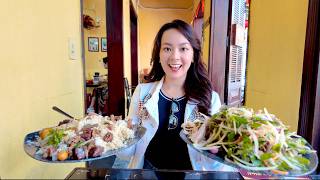
A personal travel guide to Hoi An, Vietnam, from a frequent visitor who has returned over 20 times. The video covers a full day's itinerary, starting with a morning bike ride through Tra Que Village, where local farmers use seaweed from the Co Co River as fertilizer. A stop at Cafe Slow offers a place to journal and watch the resident dog. Lunch features Hoi An's signature white rose dumplings (banh bao) and fried wontons at a family-run shop where the recipe has been passed down for over 100 years. Afternoon activities include wandering the Old Town to see the Japanese Covered Bridge (featured on the 20,000 VND banknote), exploring hidden alleys, and getting custom-tailored clothing at Tong Tailor. Dinner is at Mua, a modern Vietnamese restaurant that changes its tasting menu seasonally and makes its own sake from ST25 rice. The video also recommends accommodation options from five-star hotels to homestays, and notes that the best time to visit is spring for clear skies and calm seas, though storm season offers a unique perspective on local resilience.
Key Facts
- White rose dumplings (banh bao) have been made in Hoi An for over 100 years using a secret family recipe.
- The Japanese Covered Bridge appears on the 20,000 VND banknote.
- Tra Que Village farmers use seaweed from the Co Co River as fertilizer for vegetables.
- The Taste of Sea homestay features decor made from abandoned boats and offers beach views.
- Mua restaurant changes its tasting menu seasonally and makes its own sake from ST25 rice.